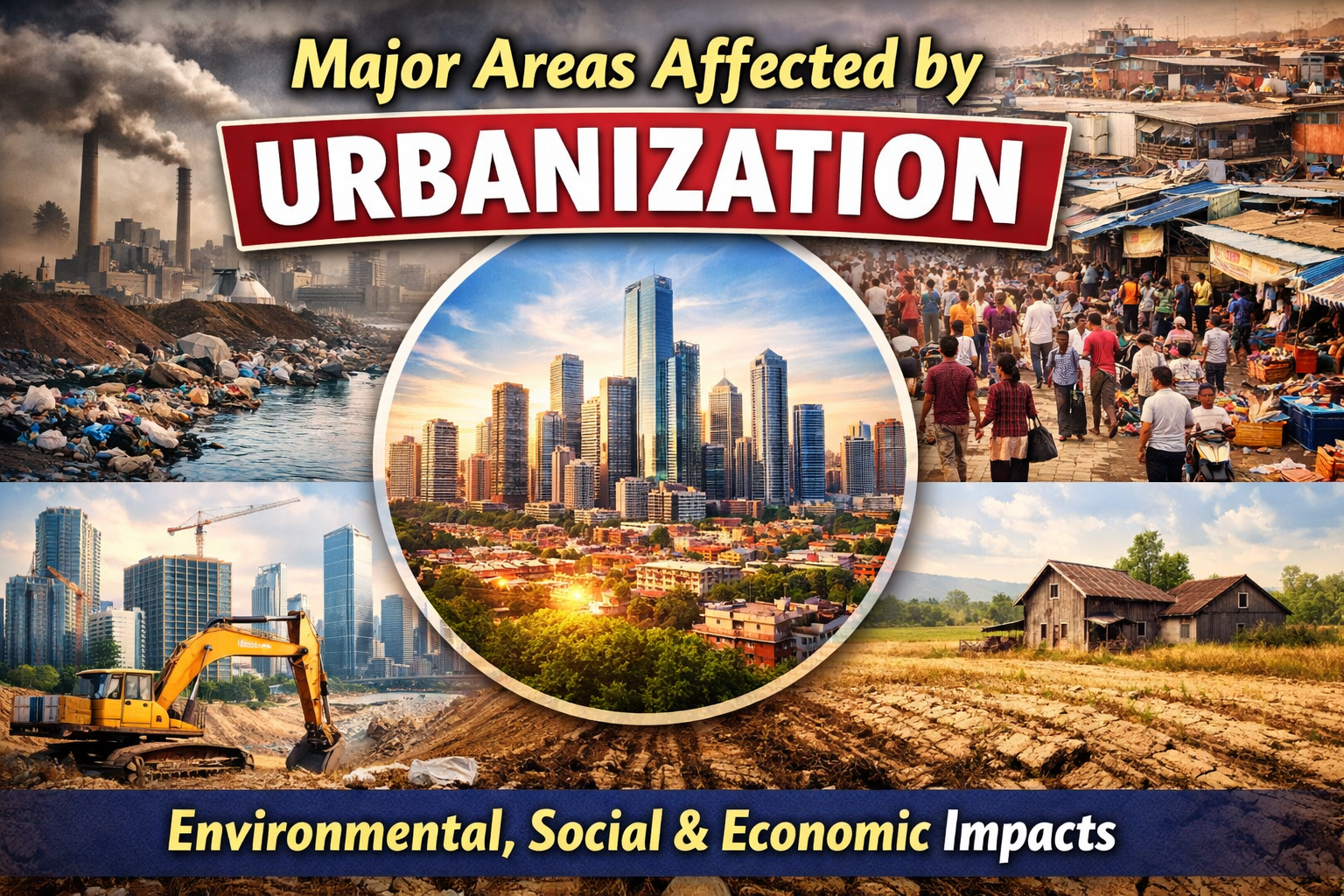
Areas Affected by Urbanization
Urbanization refers to the increasing concentration of population in cities and towns. It is one of the most transformative global trends of the 21st century. While urbanization brings economic growth, modernization, and improved infrastructure, it also creates serious social, environmental, and economic challenges.
1. Environmental Impact
Air Pollution
Industrial growth, increasing vehicles, and construction activities release harmful gases such as carbon dioxide and sulfur dioxide. Many cities experience smog, respiratory diseases, and poor air quality.
Water Pollution
Urban waste, sewage discharge, and industrial effluents contaminate rivers and groundwater. In many developing cities, untreated wastewater flows directly into water bodies.
Deforestation and Land Degradation
Expansion of residential and commercial areas leads to clearing of forests and agricultural land, causing biodiversity loss.
Urban Heat Island Effect
Concrete buildings and roads absorb heat, making cities warmer than surrounding rural areas.
2. Social Structure and Lifestyle Changes
Migration and Overpopulation
People migrate to cities in search of jobs, education, and better healthcare. This leads to overcrowding and pressure on public services.
Slum Development
Rapid population growth often results in unplanned settlements with poor sanitation and unsafe housing conditions.
Lifestyle Transformation
Urban life encourages modernization, nuclear family systems, and changes in traditional values and cultural practices.
Social Inequality
Urban areas often show a wide gap between wealthy and low-income populations.
3. Economic Impact
Employment Opportunities
Cities provide job opportunities in industries, services, technology, and business sectors, contributing to economic growth.
Growth of Informal Sector
Many migrants work in informal jobs without legal protection, job security, or stable income.
Infrastructure Pressure
Roads, electricity, water supply, and transportation systems become overloaded due to rapid urban expansion.
Rising Cost of Living
Housing, food, healthcare, and education costs are generally higher in urban areas.
4. Health and Public Services
Disease Spread
High population density increases the risk of communicable diseases.
Waste Management Issues
Poor garbage disposal systems lead to pollution and serious health hazards.
Mental Health Challenges
Urban stress, competition, and fast-paced lifestyles contribute to anxiety and depression.
Improved Healthcare Access
On the positive side, cities usually offer better hospitals and specialized medical services.
5. Agricultural and Rural Impact
Loss of Farmland
Agricultural land is often converted into residential and industrial zones.
Rural Depopulation
Young people migrate to cities, leaving behind aging populations in rural areas.
Food Security Concerns
Reduction in farming land can affect food production and increase dependence on imports.
6. Cultural and Political Impact
Cultural Diversity
Cities become melting pots of different cultures, languages, and traditions.
Governance Challenges
Rapid urban growth requires effective planning, policy-making, and sustainable development strategies.
Loss of Traditional Values
Modern urban lifestyles may weaken traditional community bonds and social cohesion.
Conclusion
Urbanization is a double-edged sword. It drives economic development, innovation, and modernization, but it also creates environmental degradation, social inequality, and infrastructure challenges. Sustainable urban planning, green infrastructure, efficient public transportation, proper waste management, and balanced rural development are essential to ensure that urbanization improves quality of life without causing long-term crises.
