What is Forced Migration and Its Impact on Internal Population Displacement?
Introduction
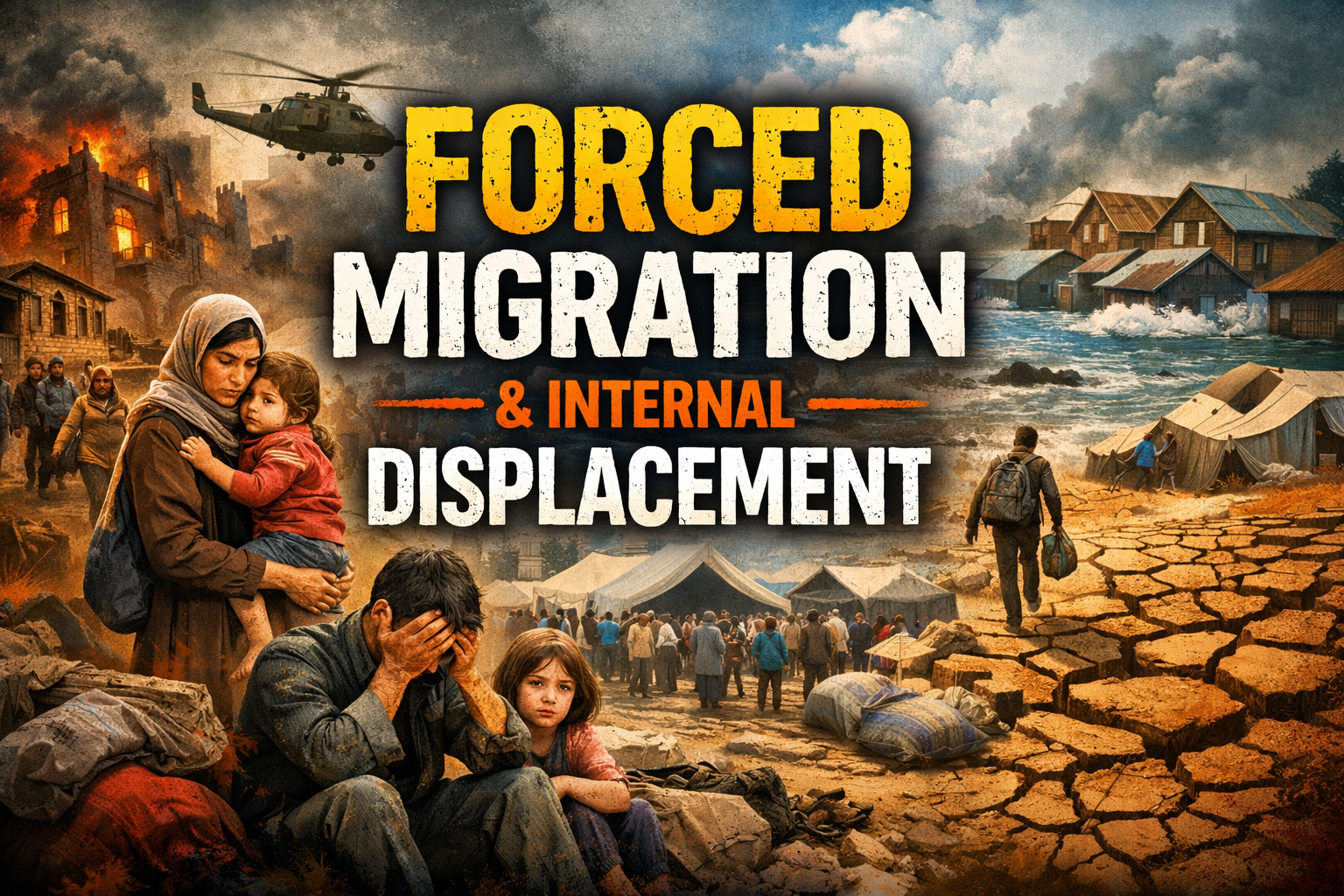
Forced migration is one of the most pressing humanitarian and socio-political issues of the modern world. Unlike voluntary migration, where individuals move in search of better economic opportunities or improved living standards, forced migration occurs when people are compelled to leave their homes against their will due to circumstances beyond their control. These circumstances often include armed conflict, persecution, natural disasters, environmental degradation, development projects, or political instability.
Internal population displacement, a major consequence of forced migration, refers to people who are forced to flee their homes but remain within the borders of their own country. These individuals are known as Internally Displaced Persons (IDPs).
Understanding Forced Migration
Conflict-Induced Displacement
Armed conflicts and civil wars are primary causes of forced migration. For example, the ongoing war in Syria has displaced millions internally and externally. Similarly, conflict in Ukraine has led to massive internal displacement in recent years.
Persecution and Human Rights Violations
Ethnic, religious, or political persecution forces people to flee for safety. The persecution of the Rohingya community in Myanmar is a notable example of forced displacement.
Natural Disasters
Earthquakes, floods, hurricanes, and droughts often result in sudden displacement. For instance, the 2010 earthquake in Haiti left millions homeless.
Climate Change and Environmental Degradation
Rising sea levels, desertification, and extreme weather events increasingly contribute to displacement. Countries like Bangladesh face severe climate-induced internal displacement due to flooding and cyclones.
Development-Induced Displacement
Large infrastructure projects such as dams, highways, and urban expansion may require communities to relocate. For example, the Three Gorges Dam project in China displaced over a million people.
What is Internal Population Displacement?
Internal displacement occurs when people are forced to leave their homes but do not cross international borders. Unlike refugees, IDPs remain under the jurisdiction of their own government.
- Sudden or gradual forced movement
- Temporary or prolonged displacement
- Lack of international legal refugee protection
- Dependence on national governments and humanitarian agencies
According to global reports, tens of millions of people worldwide are internally displaced due to conflict and disasters each year.
Major Impacts of Forced Migration on Internal Population Displacement
Social Impact
- Disruption of Families and Communities: Families may be separated during displacement. Traditional social networks collapse.
- Education Disruption: Children often lose access to schools, leading to long-term educational setbacks.
- Health Risks: IDPs frequently live in overcrowded shelters with poor sanitation, increasing the risk of disease outbreaks.
Economic Impact
- Loss of Livelihood: Displaced individuals often lose farmland, jobs, and businesses.
- Increased Poverty: Without stable income, displaced families may fall into extreme poverty.
- Strain on Host Communities: Local infrastructure such as housing, water supply, healthcare, and employment markets becomes overstretched.
Political and Governance Impact
- Pressure on Government Resources: Governments must allocate significant resources for emergency relief and reconstruction.
- Security Concerns: Large-scale displacement can increase tensions between host communities and displaced populations.
- Policy Challenges: Managing IDPs requires comprehensive policies and coordination with humanitarian organizations.
Psychological and Emotional Impact
- Trauma and Mental Health Issues: Experiencing violence, disasters, or loss can cause severe emotional distress.
- Loss of Identity and Belonging: Displacement often results in cultural disconnection and identity crisis.
Long-Term Consequences of Internal Displacement
- Urban overcrowding
- Informal settlements and slums
- Increased inequality
- Social unrest
- Generational poverty
Protracted displacement situations can last for decades, making reintegration and recovery even more difficult.
Global Perspective
Forced migration is a global phenomenon affecting regions across Africa, the Middle East, South Asia, and Latin America. Climate change is expected to increase future displacement, especially in vulnerable countries.
International organizations such as the United Nations and humanitarian agencies work to protect and support displaced populations. However, long-term solutions require political stability, economic development, disaster preparedness, and climate adaptation strategies.
Possible Solutions and Policy Recommendations
- Strengthening disaster preparedness systems
- Promoting peacebuilding and conflict resolution
- Ensuring legal protection for IDPs
- Investing in climate resilience infrastructure
- Supporting livelihood programs for displaced communities
- Encouraging community-based rehabilitation and reintegration
Conclusion
Forced migration is a complex and multidimensional issue that significantly contributes to internal population displacement. Whether driven by conflict, persecution, disasters, or development projects, it disrupts lives, weakens social systems, and places heavy burdens on governments and communities.
Addressing internal displacement requires long-term planning, humanitarian commitment, inclusive policies, and international cooperation. As global challenges such as climate change and political instability intensify, understanding and responding to forced migration becomes more critical than ever for ensuring human dignity, stability, and sustainable development.
