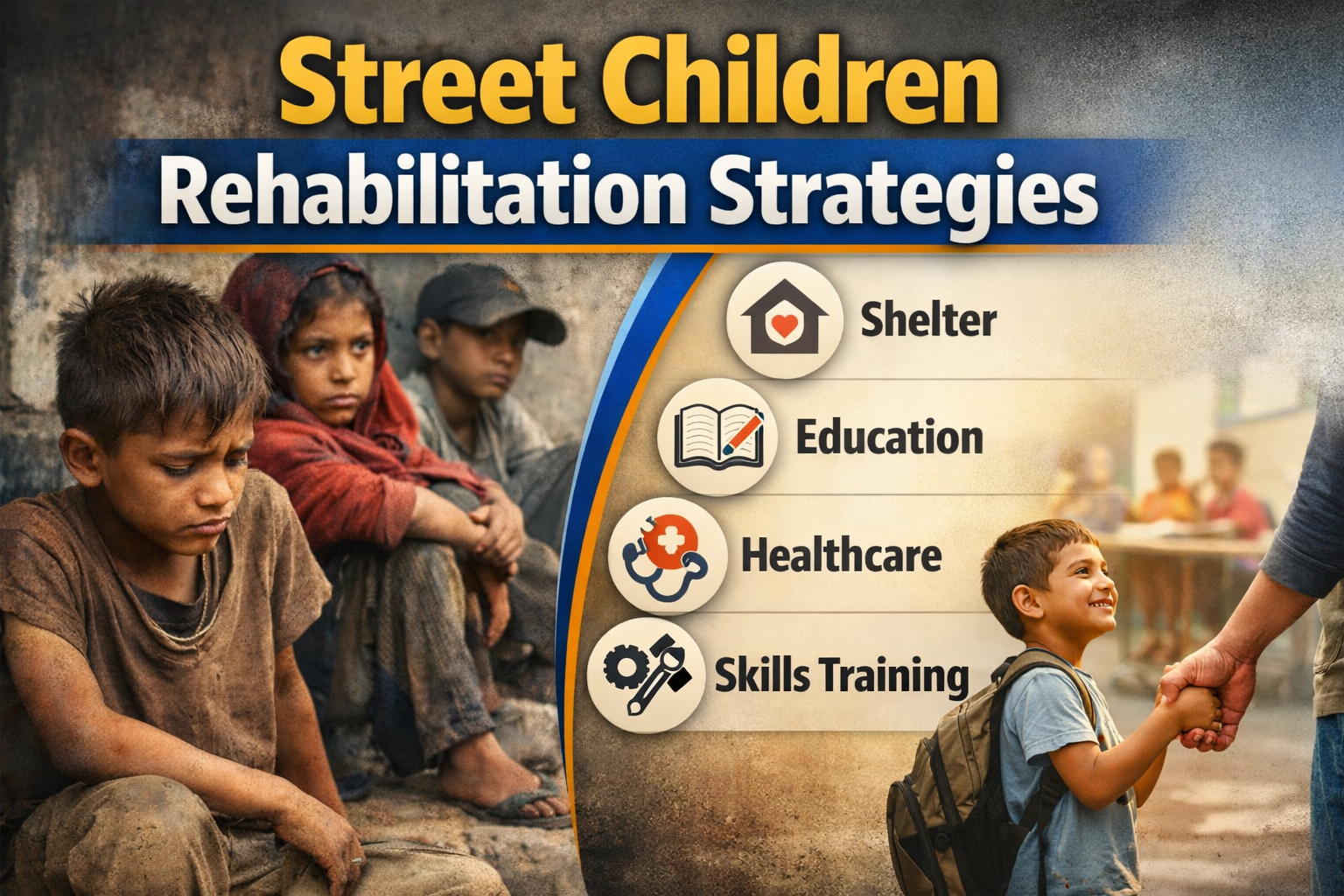
Measures That Can Be Adopted to Rehabilitate Street Children
Street children represent one of the most vulnerable and marginalized groups in society. They often face poverty, abuse, neglect, exploitation, lack of education, substance abuse, and exposure to crime. Rehabilitation of street children is not just about providing temporary shelter—it requires a holistic, long-term, and coordinated approach that addresses their physical, emotional, social, and economic needs.
Below is a comprehensive discussion of effective measures that can be adopted to rehabilitate street children.
1. Identification and Outreach Programs
The first step in rehabilitation is identifying street children and building trust with them. Many children living on the streets are hesitant to approach authorities due to fear, trauma, or previous negative experiences.
- Mobile outreach teams visiting streets, railway stations, bus parks, and marketplaces.
- Social workers trained in child psychology.
- Immediate provision of food, clothing, and medical care.
- Trust-building before moving to institutional care.
Outreach programs act as a bridge between street life and rehabilitation services.
2. Provision of Safe Shelter and Basic Needs
Street children need immediate protection from violence, abuse, and harsh weather conditions. Safe shelter homes provide stability and security.
- Clean and safe sleeping facilities.
- Nutritious meals and clean drinking water.
- Sanitation and hygiene facilities.
- A caring and protective environment.
Shelters should not feel like detention centers. They must provide warmth, care, and dignity.
3. Access to Education
Education is one of the most powerful tools for breaking the cycle of poverty.
- Non-formal education programs for children who have missed schooling.
- Bridge courses to reintegrate children into formal schools.
- Free school supplies, uniforms, and books.
- Flexible learning schedules for working children.
- Scholarships and financial assistance.
Education restores hope and creates opportunities for a stable future.
4. Psychological Counseling and Emotional Support
Many street children suffer from trauma, abuse, neglect, and addiction. Without mental health support, rehabilitation efforts may fail.
- Professional counseling services.
- Trauma-informed care.
- Group therapy sessions.
- Recreational and creative activities like art, music, and sports.
- Mentorship programs.
Emotional healing is as important as physical support.
5. Healthcare Services
Street children often suffer from malnutrition, untreated injuries, infections, and substance abuse.
- Regular health checkups.
- Vaccination programs.
- Treatment for infectious diseases.
- Nutrition support programs.
- Rehabilitation for drug and substance abuse.
Good health is essential for successful reintegration into society.
6. Family Reintegration Programs
In many cases, children can be reunited with their families if proper support is provided.
- Tracing family members.
- Counseling for parents and guardians.
- Financial or livelihood support for families.
- Monitoring after reunification.
Reunification should only occur if the home environment is safe and supportive.
7. Vocational Training and Skill Development
Not all children can immediately return to formal education. Older street children especially need employable skills.
- Carpentry and masonry training.
- Tailoring and handicrafts.
- Computer and digital skills.
- Automobile repair.
- Hospitality and service training.
Providing skills ensures financial independence and reduces the risk of returning to street life.
8. Legal Protection and Child Rights Enforcement
- Strict enforcement of child labor laws.
- Protection from trafficking and sexual exploitation.
- Establishment of child protection units.
- Free legal aid services.
Strong legal systems create safer environments for vulnerable children.
9. Community Awareness and Participation
- Awareness campaigns about child rights.
- Encouraging citizens to report abuse.
- Reducing stigma against former street children.
- Promoting foster care and adoption programs.
Communities must shift from neglecting street children to supporting them.
10. Government and NGO Collaboration
- Public-private partnerships.
- Sustainable funding mechanisms.
- Monitoring and evaluation systems.
- Data collection for policy improvement.
Long-term change is only possible with structured, consistent collaboration.
Challenges in Rehabilitation
- Lack of funding.
- Social stigma.
- Substance addiction.
- Repeated escape from shelters.
- Family instability.
Conclusion
Rehabilitation of street children is a complex but essential social responsibility. It demands a holistic approach that includes shelter, education, healthcare, psychological support, vocational training, legal protection, and family reintegration. Governments, NGOs, communities, and individuals must work together to ensure that no child is forced to live on the streets.
Every child deserves safety, education, love, and opportunity. By adopting comprehensive and compassionate rehabilitation measures, societies can transform vulnerable street children into empowered and productive citizens.
